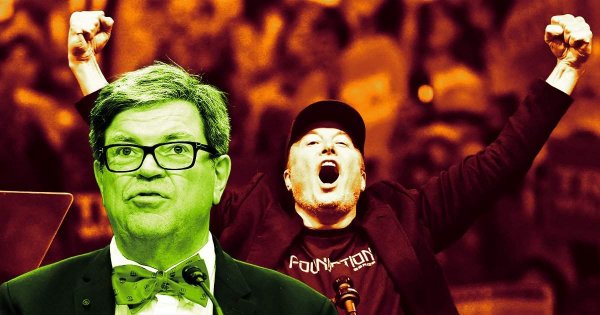
The ongoing feud between two of technology's most prominent figures escalated this week when artificial intelligence researcher Yann LeCun directly accused Elon Musk of undermining democratic institutions. In a sharp rebuke posted on the social media platform formerly known as Twitter, LeCun responded to Musk's criticism of the New York Times by asserting that the billionaire entrepreneur poses a greater danger to American democracy than any external threat.
LeCun, a Turing Award recipient and chief AI scientist at Meta, did not mince words. He described Musk as an oligarch who purchased a massive platform to amplify divisive rhetoric and support a would-be dictator. The exchange began after conservative commentator Ben Shapiro questioned the New York Times' reporting methods, prompting Musk to quote-tweet a message declaring the newspaper "a threat to our democracy."
LeCun's counterattack was swift and pointed. "Objectively, you are the biggest threat to democracy in America today," he wrote, adding that Musk uses his influence to discredit the press, scientists, research organizations, the electoral process, and other pillars of a functioning society.
This is not the first time the two have clashed. Earlier this year, LeCun mocked a hiring announcement from xAI, Musk's artificial intelligence venture, suggesting that potential employees should be wary of a boss who claims their work will be solved within a year. Musk responded by questioning LeCun's recent scientific contributions, asking what research he had produced in the past five years.
LeCun answered by sharing a link to more than 80 technical papers he had published since early 2022. When Musk dismissed the work as "going soft" and urged him to "try harder," LeCun responded with laughter, pointing out that Musk was acting as if he were LeCun's supervisor.
Science vs. Megaphone
The exchange highlights a broader tension between scientific credibility and media influence. LeCun, whose academic record includes groundbreaking work in deep learning, has positioned himself as a defender of evidence-based discourse. Musk, on the other hand, commands a vast audience through his ownership of the social media platform and his ventures in space exploration and electric vehicles.
The dispute also reflects deeper divisions over the role of billionaires in public discourse. LeCun's criticism echoes concerns raised by scholars and policymakers about the concentration of media power in the hands of a few individuals. By calling out Musk's use of his platform to challenge democratic norms, LeCun has reignited a debate that extends beyond personal animosity.
While the two have traded barbs publicly, their conflict underscores a fundamental disagreement about the purpose of technology and the responsibilities of those who shape it. LeCun, who has spent decades in academic research, emphasizes the importance of rigorous methodology and peer review. Musk, a self-described free speech absolutist, champions unfiltered expression, even when it conflicts with established institutions.
As the exchange continues to generate attention, it remains unclear whether the two will resolve their differences or simply agree to disagree. What is certain is that their clash has brought to the forefront questions about the intersection of technology, power, and democracy—questions that are likely to persist long after the latest tweet fades from view.