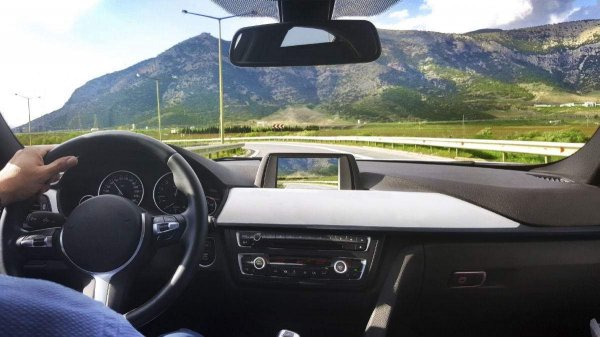
Researchers in Germany are pushing the boundaries of automotive technology by developing a system that monitors the interior of a vehicle, not just its surroundings. The project, known as Intelligent Car Interior (InCarIn), aims to use depth-perception cameras to track the movements, size, and posture of passengers inside a car.
Dr. Michael Voit, group manager at Fraunhofer IOSB, explains that the goal is to expand sensor technology to the entire interior. "Using depth-perception cameras, we capture the vehicle's interior, identify the number of people, their size and their posture. From this we can deduce their activities," he said.
While the idea of constant interior monitoring might raise privacy concerns, the team highlights practical benefits. For instance, a display could show the driver a live video of the back seat, eliminating the need to turn around to check on children. The system could also analyze individual body sizes and positions, allowing for automatic adjustments to seats and other features for each passenger.
Supporting Autonomous Driving
Beyond convenience, the sensors are designed to assist partial autonomous driving systems. Frederik Diederichs, scientist and project manager at Fraunhofer IAO, notes that the system can estimate how long a driver will need to resume full control of the vehicle after a period of autonomous driving. This could be crucial for safe handovers between the car and the driver.
The researchers have already refined the cameras and evaluation algorithms using their own driving simulator. They have successfully enabled the software to detect limbs and trace passenger movements. The next step is to teach the computer to recognize what passengers are doing and what objects they are holding.
Identifying objects poses a challenge, as Dr. Voit points out: "One challenge is to reliably identify the objects people are using. If one considers that in principle, any object could find its way into the vehicle, we must somehow limit the number of detectable possibilities. We therefore set basic parameters and tell the computer where the sun visor and glove compartment are, for example."
The system is set to be tested in a Volkswagen Multivan. If successful, this artificial intelligence could serve as a precursor to integrating autonomous cars with intelligent home assistance systems, an idea that even Rolls Royce is exploring.