
A University of Oxford physicist argues that geoengineering cannot replace decarbonization in addressing climate change. Raymond Pierrehumbert contends that reflective particles and similar technologies offer only temporary relief and cannot prevent long-term environmental damage. He urges a global shift away from fossil fuels and preservation of carbon sinks.
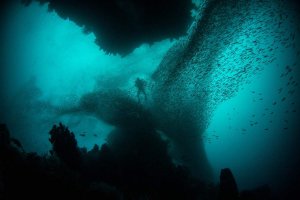
New simulations from UC Irvine project that continued warming of the Southern Ocean could disrupt global nutrient cycles, reducing marine food production by 24% and fish catches by at least 20% by 2300. The study, published in Science, highlights a slow-moving feedback loop that could threaten food security for billions.
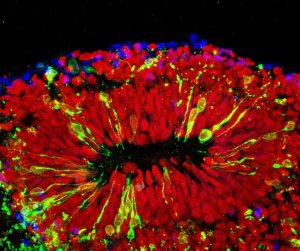
Scientists are using tiny lab-grown clusters of human brain cells, called minibrains, to study neurological and neurodegenerative diseases. At a recent neuroscience conference, researchers highlighted their potential for drug testing and for understanding how Zika virus damages developing brains.
Researchers have developed a fluorescent nanoprobe that detects the low pH of tumors, enabling noninvasive identification and monitoring through optical imaging, MRI, and PET. The probe is biocompatible and shows effects within 24 hours under bright light, offering a potential universal method for tumor visualization.
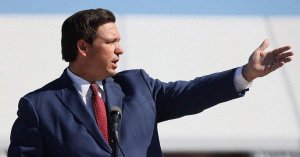
Florida Governor Ron DeSantis is asking lawmakers for $3.5 million to establish a 200-member civilian military force under his direct command, separate from the Pentagon. The proposal, which would make Florida the 23rd state to activate such a force, comes amid a dispute over National Guard vaccine requirements.
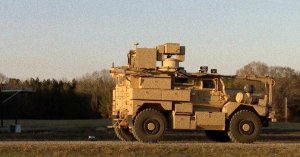
The U.S. Air Force has awarded a $40 million contract to Parsons for the RADBO system, a laser mounted on a ground vehicle capable of detonating landmines and unexploded ordnance from over 300 meters away. This development underscores the military's growing reliance on directed energy for non-combat roles, enhancing airfield safety without risking personnel.
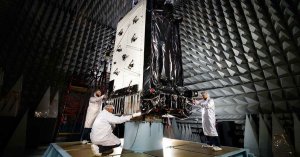
The U.S. Air Force is inviting ethical hackers to attempt to seize control of an active military satellite or its ground station, following a successful pilot program on an F-15 fighter jet. The initiative aims to expose vulnerabilities in military systems and strengthen the cybersecurity supply chain.

New research published in Nature uses a quantum annealer to simulate how 'false vacuum' decay could unfold, potentially reshaping the universe's fundamental structure. The study, led by University of Leeds and IST Austria scientists, reveals bubble dynamics that may also improve quantum computer error correction.

A physicist at the Max Planck Institute proposes that gravity arises from random quantum 'flashes' that collapse wave functions, potentially bridging quantum mechanics and general relativity. The theory, based on the GRW model, aligns with Newtonian gravity but awaits further mathematical validation for Einstein's framework.

Explore the scientific concepts behind parallel universes, from infinite space and bubble universes to brane theory and quantum many-worlds. Understand what physicists mean by a multiverse and why reaching these alternate realities remains a distant dream.
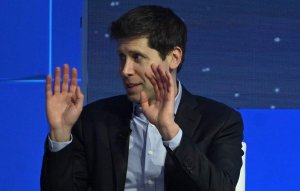
In an open letter to President Joe Biden, 97 African workers who label and filter data for AI systems like OpenAI's DALL-E and Meta's Llama allege they are paid under $2 an hour and suffer severe psychological trauma, calling their conditions 'modern day slavery.' The letter, released ahead of Kenyan President William Ruto's US visit, urges trade talks to address labor abuses.

Alphabet's quarterly profit hit $112 billion, largely from tech investments, not AI revenue. However, a $195-205 billion capital expenditure forecast for 2026 and first-ever negative free cash flow triggered a 6.89% stock drop, intensifying AI bubble concerns.

Moonshot AI's Kimi-K3, an open-weight model, surged to first place in the Frontend Code Arena, outpacing proprietary US rivals. The achievement, announced by Arena.ai, intensifies questions about the value of expensive closed-source AI models and pressures US tech valuations.

Michael Smith, a North Carolina man, pleaded guilty to conspiracy to commit wire fraud for using AI-generated songs and bots to fraudulently earn over $8 million in streaming royalties. The scheme diverted funds from real artists, and Smith faces up to five years in prison.
Atlassian announced layoffs of about 1,600 employees, roughly 10% of its workforce, as it rebalances resources toward AI-focused collaboration tools. The move reflects broader tech industry anxiety over AI's role in reshaping jobs, with CEO Mike Cannon-Brookes emphasizing that AI changes skill needs rather than simply replacing people.

A Guardian investigation reveals that Google's AI Overviews frequently provide inaccurate and potentially dangerous health guidance, such as advising pancreatic cancer patients to avoid high-fat foods, contrary to medical recommendations. Experts warn that this misinformation could lead to serious harm or even death, highlighting the risks of relying on AI for medical advice.

A growing number of AI deals involve companies investing in each other, raising concerns about a potential bubble. Nvidia, OpenAI, Oracle, and AMD are central to these circular transactions, which some experts compare to the dot-com era. The lack of profitability among key players adds to the unease.

A growing number of psychiatrists are treating patients whose delusional or paranoid episodes are linked to prolonged interactions with AI chatbots like ChatGPT. New reporting highlights cases of hospitalization and self-harm, raising concerns about the lack of formal diagnosis and preparedness in mental health services.

A new MIT study analyzing a Reddit group for people in relationships with AI chatbots finds that most users stumble into these bonds while using tools like ChatGPT for everyday tasks, not through dedicated companion apps. The research reveals high levels of loneliness, secrecy, and occasional harmful outcomes, prompting concerns about the psychological impact of AI companionship.
As companies cut costs with AI, a new gig niche has emerged: freelancers who repair AI-generated art, writing, and code. From fixing garbled logos to rewriting robotic copy, these workers face lower pay but see a continued need for human oversight.