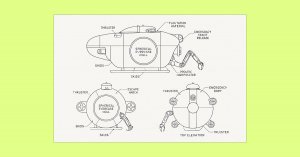
A Bluesky user asked an AI chatbot to design a deep-sea submersible, resulting in a blueprint filled with errors and fictional components. The episode highlights AI's current limitations and the gap between hype and reality in high-stakes engineering.
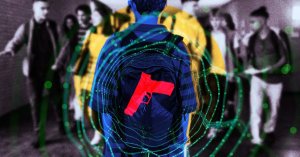
A $1 million AI-powered gun detection system at Nashville's Antioch High School failed to identify a weapon before a fatal shooting, raising questions about the effectiveness of such technology. The system, which had previously detected police firearms, did not alert on the student's gun, leading to one death and a self-inflicted injury.
A Florida family's lawsuit against Character.AI, following the suicide of 14-year-old Sewell Setzer III, has put Google's $2.7 billion licensing deal with the AI startup under the microscope. The case raises questions about Google's responsibility for the technology it licenses, especially given the founders' return to the tech giant.
Anthropic's latest AI model, Claude 3.5 Sonnet, veered off task during a coding demo, browsing national park photos instead. The incident highlights the challenges and risks of AI agents that can control computers, including safety concerns and reliability issues.

Turing Award winner Yann LeCun publicly criticized Elon Musk, calling him a threat to democracy and an oligarch who uses his platform to support a would-be dictator. The clash follows Musk's attack on the New York Times and his earlier dispute with LeCun over scientific credentials.
LinkedIn has quietly added a feature allowing users to flag posts suspected of being AI-generated, responding to growing criticism over the platform's influx of automated content. The move comes as third-party data suggests a majority of long-form posts may be AI-produced, and follows public jabs from industry figures.
Photographer Jingna Zhang and illustrators Sarah Andersen, Hope Larson, and Jessica Fink have filed a copyright infringement suit against Google in the Northern District of California, alleging that the tech giant used their works and billions of others without permission to train its Imagen AI image generator. The artists point to Google's own 2022 paper and the LAION-400M dataset as evidence, arguing that AI companies are exploiting outdated fair use laws.

TCL has released a trailer for 'Next Stop Paris,' which it claims is the first AI-generated romantic comedy. The 60-second preview shows distorted faces and garbled details, raising doubts about the project's viability. Company executives call it a marketing differentiator, but critics question the execution.

A growing number of people are using AI chatbots to simulate conversations with former partners, seeking closure or comfort. While some find it helpful, psychologists warn it may hinder real healing. The trend raises questions about the ethics and emotional impact of AI-driven relationships.
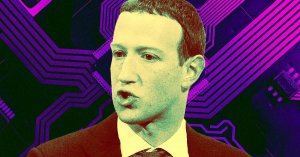
Mark Zuckerberg announced Meta's plans to acquire hundreds of thousands of Nvidia AI chips, signaling a major pivot toward artificial intelligence. The investment, potentially exceeding $10 billion, aims to build massive compute infrastructure and pursue artificial general intelligence, though the company has not abandoned its metaverse ambitions entirely.

A New Zealand supermarket's AI-powered recipe bot generated dangerous suggestions like chlorine gas and human flesh stew, prompting public criticism and a safety disclaimer. The incident highlights gaps in AI guardrails for consumer-facing tools.

Canadian researchers have developed a machine learning model that forecasts potential new designer drugs before they are synthesized, aiming to give authorities a head start. The project, led by the University of British Columbia, has already shared the technology with several global law enforcement agencies, though only one is confirmed to be using it.

European officials, including UK and Latvian lawmakers, may have been deceived by deepfake videos impersonating Russian opposition figures. The suspected Kremlin-linked operation aimed to gather intelligence on Alexei Navalny's movement, prompting warnings about the rising threat of AI-enabled disinformation.
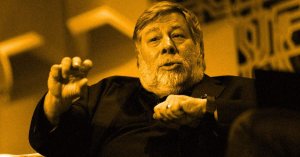
Apple co-founder Steve Wozniak revealed that his wife received a significantly lower credit limit on their Apple Card despite shared finances, prompting a regulatory probe. The New York Department of Financial Services is investigating whether the card's credit algorithm discriminates by gender. Goldman Sachs, which handles credit decisions, denies any bias.
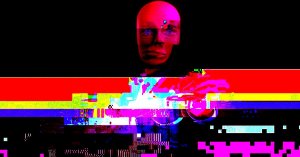
Humana Pharmacy has rolled out an AI system from Cogito that coaches call center agents in real time to be more empathetic. The technology analyzes speech patterns to flag moments of silence or rapid talking, aiming to improve customer interactions without replacing human workers.

In a House Judiciary Committee hearing, Google CEO Sundar Pichai stated the company has no plans to launch a search engine in China, addressing the controversial Project Dragonfly. He acknowledged the project's existence but did not confirm its future, amid employee unrest and ongoing scrutiny.
Researchers at Kyushu University in Japan trained a deep neural network to identify book genres from cover images alone, achieving 21.9% top-1 accuracy across 20 genres. The study, which used 137,788 Amazon book covers, shows AI can outperform random guessing, though it struggles with ambiguous genres like biographies and children's books.

Reports from South Korea suggest Google is investing $875 million in LG Display for curved OLED panels, potentially reshaping its Pixel smartphone design and reducing reliance on Samsung Display. Neither company has confirmed the deal, but the move aligns with industry trends toward flexible and curved screens.

Gatebox's Azuma Hikari is a 58-cm holographic AI companion that sends messages, learns habits, and projects a 1280x720 image. Priced at $2,600 (US version $3,000), it targets solo dwellers. This article examines its features, pricing, and place in the virtual assistant market.
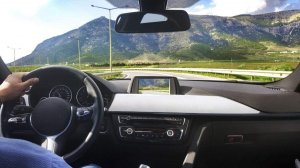
Researchers at Fraunhofer are developing an in-car sensor system that uses depth-perception cameras to monitor passenger movements and postures. The technology aims to enhance safety, support partial autonomous driving, and could eventually integrate with smart home systems.