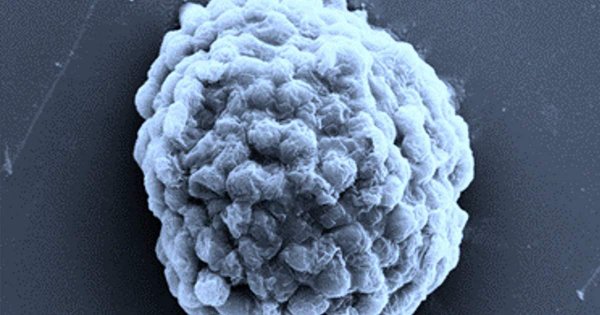
In a development that could eventually contribute to carbon-neutral energy, scientists have demonstrated that microscopic water droplets packed with photosynthetic algae can be coaxed into producing hydrogen instead of oxygen. The research, published Wednesday in the journal Nature Communications, represents a step toward sustainable fuel production, though the current output is far from powering homes or vehicles.
The work, a collaboration between the University of Bristol and the Harbin Institute of Technology in China, builds on a known quirk of photosynthesis. Typically, the process splits water and releases oxygen, but when algae are tightly packed together in a confined space, the local oxygen supply becomes insufficient for the usual reactions. In that environment, hydrogen-producing enzymes take over, yielding hydrogen gas.
To enhance this effect, the team coated the droplets with oxygen-consuming bacteria. This modification increased the reliability of hydrogen production across the algae population, according to the study.
While the droplets are minuscule, the researchers see potential for scaling up the approach. If successful, it could lower the cost of hydrogen fuel cells, which are a promising but currently expensive clean energy technology. The method also offers an environmentally benign route to hydrogen, as it relies on natural biological processes rather than energy-intensive industrial methods.
How the Droplet Factories Work
Inside each droplet, the algae are compressed in a sugary solution, which limits oxygen availability. This triggers a metabolic shift, diverting energy toward hydrogen generation. The bacteria layer on the droplet surface consumes any remaining oxygen, further stabilizing the hydrogen-producing state.
Stephen Mann, a biologist at the University of Bristol and co-author of the study, said in a press release that using droplets as a platform to control algal cell organization and photosynthesis in synthetic micro-spaces offers a potentially environmentally benign approach to hydrogen production that the team hopes to develop further.
The research is still in its early stages, and the scientists acknowledge that the current scale is insufficient to address energy crises or greenhouse gas emissions directly. However, the concept aligns with broader efforts to find renewable alternatives to fossil fuels.
Hydrogen has long been touted as a clean fuel, but its production often relies on fossil fuels or expensive electrolysis. This biological approach could offer a cheaper, greener alternative if the process can be scaled efficiently.
The findings add to a growing body of research on bio-inspired energy solutions, and the team's next steps will focus on optimizing the system for larger-scale applications.