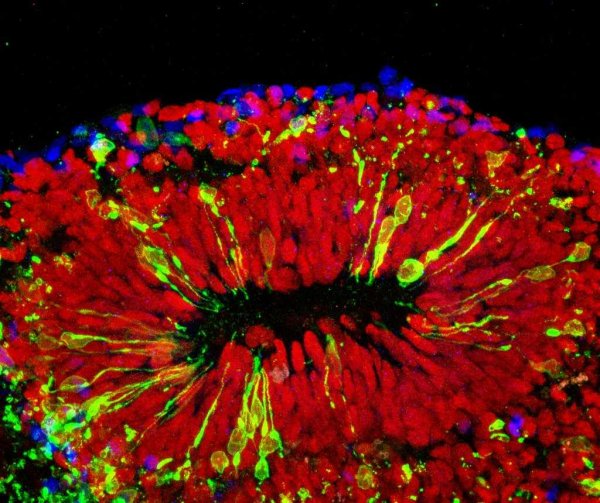
In a Baltimore laboratory, researchers are cultivating tiny clusters of human brain cells that, despite being barely visible to the naked eye, are providing a new perspective on some of medicine's most intractable diseases. These structures, known as minibrains, are not actual brains but simplified, three-dimensional models that mimic certain aspects of early human brain development. Their potential was a central theme at the recent Society for Neuroscience meeting in San Diego, where scientists presented findings that could reshape how neurological disorders are studied and treated.
Minibrains are created from human skin cells, which are first reprogrammed into neural stem cells and then guided to differentiate into the various cell types found in the brain. Remarkably, these miniature structures develop distinct regions and exhibit intercellular communication, despite their diminutive size. This level of organization allows researchers to observe complex brain-like activity in a controlled laboratory setting, offering a more accurate representation of human brain function than traditional animal models.
Zika Virus Research Provides Key Insights
One notable application was presented by a team from the Johns Hopkins Bloomberg School of Public Health. They used minibrains to investigate how the Zika virus affects embryonic brain development. Because minibrains resemble the early-stage fetal brain, they proved to be an effective model for this research. The team's work revealed that the virus hijacks developing brain cells, turning them into viral factories, which ultimately leads to cell death and a reduction in brain cell size. This finding offers a mechanistic explanation for the microcephaly and other neurological complications observed in infants born to mothers infected with Zika.
The use of minibrains in this context underscores their value in studying infectious diseases that target the nervous system, a capability that is difficult to replicate with conventional animal models due to species-specific differences.
A More Human-Relevant Platform for Drug Testing
Dr. Thomas Hartung, a researcher and experimental toxicologist at Johns Hopkins, emphasized the potential of minibrains in pharmaceutical research. He pointed out that animal testing often yields misleading results because animal brains differ significantly from human brains. "We need human systems to tell us about humans, and that's why this is such a big step forward," Hartung told NPR. This sentiment reflects a growing recognition within the scientific community that human-relevant models are essential for developing effective treatments for brain disorders.
The ability to test new drugs on minibrains could accelerate the development of therapies for conditions such as autism, schizophrenia, Alzheimer's disease, and Parkinson's disease. By observing how these cell clusters respond to various compounds, researchers can identify promising candidates and rule out ineffective or toxic ones earlier in the drug development process, potentially saving time and resources.
From Concept to Mainstream Research Tool
While minibrains have been created by various research groups for several years, their prominent display at the Society for Neuroscience meeting signals a shift toward broader acceptance and standardization. The conference showcased not only the Zika study but also other applications, indicating that the scientific community is increasingly viewing minibrains as a credible and versatile platform for brain research.
As the field advances, researchers are optimistic that these lab-grown clusters will contribute to a deeper understanding of neurological diseases and ultimately aid in the search for cures. However, experts caution that minibrains are not a complete substitute for animal models or human clinical trials; they are one tool among many in the biomedical research arsenal. Still, their ability to recapitulate key aspects of human brain biology makes them an invaluable addition to the study of the brain.