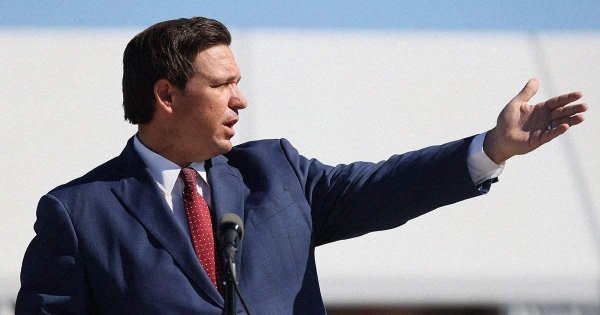
Florida Governor Ron DeSantis is asking the state legislature for $3.5 million to equip and train a 200-member volunteer force that would operate under his direct authority, outside the Pentagon's chain of command. The proposal, first reported by CNN, would establish a Florida State Guard — a civilian militia that would not be subject to federal oversight.
The request comes just days after Defense Secretary Lloyd Austin warned that National Guard members who refuse the COVID-19 vaccine could lose pay and training opportunities. Under current federal law, states share control of the National Guard with the Department of Defense, but a civilian force like the one DeSantis envisions would be exclusively under Florida's command.
DeSantis, who has consistently opposed vaccine mandates, has not indicated whether members of the proposed State Guard would be required to get vaccinated. Given his public stance, it appears unlikely that inoculation would be a condition of service.
Legal Precedent and Historical Roots
While the idea of a governor raising a personal militia may sound extreme, it is not without legal basis. State defense forces date back to the 18th century, when state militias were established under the Constitution. Today, 22 states — including New York, Vermont, California, and Washington — have activated such forces, and Florida would become the 23rd if the legislature approves the measure.
Florida's own State Guard was originally created during World War II, when the state's National Guard members were deployed to Europe. The force was disbanded after the war, but governors retain the legal authority to re-activate or establish a civilian guard at any time.
The proposal has drawn scrutiny not only for its constitutional implications but also for the governor's history of controversial remarks. DeSantis, who once urged voters not to “monkey this up” while alluding to his Black gubernatorial opponent, has faced criticism for racial insensitivity. Critics argue that giving such a figure control over an armed force raises serious concerns about accountability and misuse of power.
Funding and Legislative Path
The $3.5 million request would cover equipment, training, and operational costs for the 200-member volunteer unit. The Florida legislature, which is controlled by Republicans, will likely debate the proposal in the upcoming session. If approved, Florida would join a small but growing number of states that have revived these once-dormant forces in recent years.
Supporters of state defense forces argue they provide a valuable backup to the National Guard during emergencies, such as hurricanes or civil unrest, without the constraints of federal deployment. Opponents, however, worry about the potential for a politicized military force that answers only to the governor.
The proposal is still in its early stages, and no timeline has been set for legislative action. But the debate over who controls armed forces — and under what rules — is likely to intensify as more states consider similar measures.