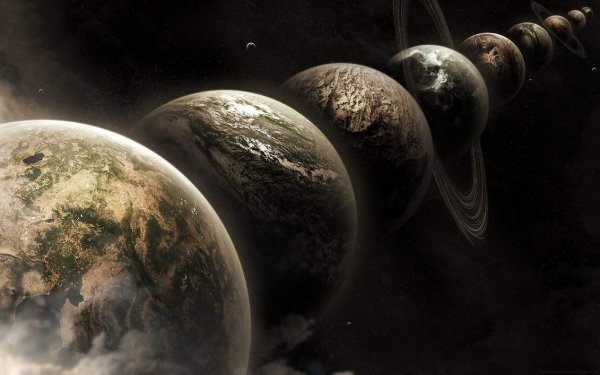
Parallel universes have long been a staple of science fiction, but they are also a serious subject of theoretical physics. The idea that our universe might be just one of many—collectively called a multiverse—raises profound questions about the nature of reality. While no direct evidence exists, several scientific theories suggest that other universes could exist, each with different physical laws or even copies of ourselves.
The concept of a multiverse stems from multiple branches of physics. One of the simplest ideas is based on the possibility of an infinite universe. Although current cosmological models describe a finite universe that began with the Big Bang about 14 billion years ago, some theoretical work considers what would happen if space were truly infinite. In that case, the laws of probability suggest that matter and energy could repeat themselves in distant regions, creating pockets of spacetime identical to our own. Calculations have estimated that an identical copy of our entire cosmological volume would be about 10^10^115 meters away, and a copy of you would be just 10^10^29 meters away—numbers so vast they defy comprehension.
Bubble Universes and Inflation
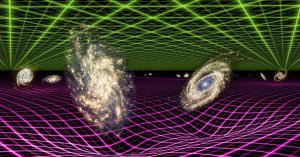
Another scenario arises from cosmic inflation, the rapid expansion of space in the earliest moments after the Big Bang. Some cosmologists propose that this expansion was so fast that it could have caused 'bubble universes' to pinch off and become separate, contiguous spacetimes. Andrei Linde, a theoretical physicist at Stanford University, has noted that every experiment supporting inflationary theory brings us closer to hints that the multiverse is real. This idea suggests that our universe is just one bubble in a frothy sea of many.
Beyond bubbles, superstring theory offers a different picture. In this framework, our universe might be a three-dimensional 'brane' floating in a higher-dimensional space called the 'bulk.' Other branes could exist nearby, each representing a separate universe. The so-called ekpyrotic scenario even proposes that collisions between branes could generate new universes, possibly explaining the Big Bang itself.
Quantum Many-Worlds
Quantum mechanics provides yet another angle. The many-worlds interpretation suggests that every quantum event spawns new universes, each exploring a different outcome. In this view, alternate versions of reality are constantly being created, branching off from every decision and every particle interaction. This would mean an infinite sea of potential timelines, where every possibility is realized somewhere.
Despite these fascinating possibilities, the prospect of ever reaching another universe remains essentially nil. The speed of light sets a cosmic speed limit that would make travel to distant statistical repetitions impossible. If brane theories are correct, escaping our own brane would require breaking free from three-dimensional space and navigating a hyperdimensional bulk—a feat that would demand godlike control over matter and energy. Even in the ekpyrotic scenario, waiting for two branes to collide would be catastrophic and highly uncertain.
For now, the multiverse remains a theoretical playground, rich with ideas but beyond our observational reach. As physicists continue to test inflation and quantum mechanics, they may one day find evidence that our universe is not alone. Until then, the search for parallel universes serves as a reminder of how much we have yet to learn about the cosmos—and how much remains to be discovered within our own.