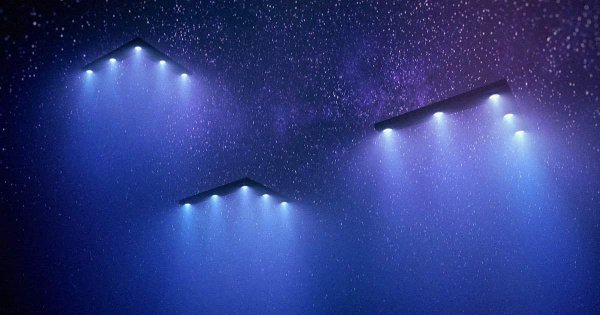
A new study from Harvard University astronomers suggests that the solar system might contain as many as 4 quintillion interstellar objects, a figure that includes the possibility of alien spacecraft. The research, led by Avi Loeb, a prominent figure in the search for extraterrestrial intelligence, and his colleague Carson Ezell, has not yet undergone peer review.
The estimate follows the 2017 discovery of 'Oumuamua, the first known interstellar object to pass through our solar system. Its unusual cigar-like shape and unexpected acceleration fueled speculation about its artificial origins, a debate that continues among scientists. Loeb has been a vocal proponent of considering extraterrestrial explanations for such anomalies.
In their study, Loeb and Ezell extrapolated from the detection rate of interstellar objects over the past eight years. Since 'Oumuamua, astronomers have identified three additional interstellar visitors, bringing the total to four. Based on this rate, the researchers calculated that the entire solar system could host up to 40 decillion such objects, though most would be beyond the reach of current instruments.
Narrowing the focus to the "habitable zone" around the Sun—the region where conditions might be suitable for life—the number drops to a more manageable 4 quintillion. This zone is of particular interest because any objects there would be closer to Earth, making them easier to study and potentially detect signs of technology.
Why the Habitable Zone Matters
The habitable zone is not just about planetary temperatures; it also represents a region where any interstellar object could be more readily observed. If even a tiny fraction of the 4 quintillion objects are artificial, the implications would be profound. Loeb acknowledges that the vast majority are likely natural space rocks, but he argues that the sheer number leaves significant room for some to be something more.
This is not the first time Loeb has pushed the boundaries of conventional astronomical thinking. His previous proposals, including the idea that 'Oumuamua might be a light sail, have sparked both interest and skepticism within the scientific community. The new study continues that trend, asking a question that many researchers might shy away from: how many potential 'Oumuamuas are out there that we simply haven't noticed?
The research was first reported by the Daily Beast, which highlighted the study's speculative nature. While the numbers are staggering, the authors stress that their calculations are preliminary and based on current detection capabilities, which are limited.
As telescopes become more advanced, the ability to spot smaller and more distant interstellar objects will improve, potentially turning these estimates into testable predictions. For now, the idea of 4 quintillion objects—alien or otherwise—lurking in our cosmic neighborhood remains a tantalizing possibility that challenges our understanding of the solar system.