


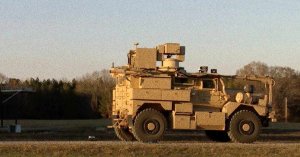
The U.S. Air Force has awarded a $40 million contract to Parsons for the RADBO system, a laser mounted on a ground vehicle capable of detonating landmines and unexploded ordnance from over 300 meters away. This development underscores the military's growing reliance on directed energy for non-combat roles, enhancing airfield safety without risking personnel.
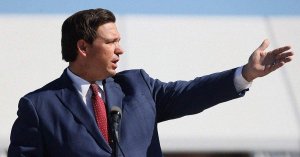
Florida Governor Ron DeSantis is asking lawmakers for $3.5 million to establish a 200-member civilian military force under his direct command, separate from the Pentagon. The proposal, which would make Florida the 23rd state to activate such a force, comes amid a dispute over National Guard vaccine requirements.

Researchers have developed a fluorescent nanoprobe that detects the low pH of tumors, enabling noninvasive identification and monitoring through optical imaging, MRI, and PET. The probe is biocompatible and shows effects within 24 hours under bright light, offering a potential universal method for tumor visualization.
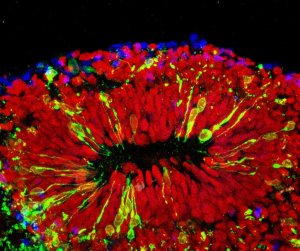
Scientists are using tiny lab-grown clusters of human brain cells, called minibrains, to study neurological and neurodegenerative diseases. At a recent neuroscience conference, researchers highlighted their potential for drug testing and for understanding how Zika virus damages developing brains.
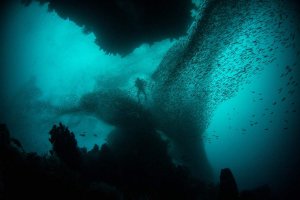
New simulations from UC Irvine project that continued warming of the Southern Ocean could disrupt global nutrient cycles, reducing marine food production by 24% and fish catches by at least 20% by 2300. The study, published in Science, highlights a slow-moving feedback loop that could threaten food security for billions.

A University of Oxford physicist argues that geoengineering cannot replace decarbonization in addressing climate change. Raymond Pierrehumbert contends that reflective particles and similar technologies offer only temporary relief and cannot prevent long-term environmental damage. He urges a global shift away from fossil fuels and preservation of carbon sinks.
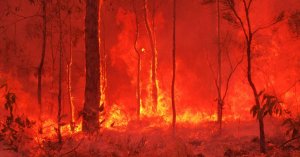
The massive Australian bushfires are not just a local crisis—they are altering weather patterns and potentially accelerating global warming. Smoke plumes and greenhouse gas emissions from the fires are spreading worldwide, with effects that could last for years.

British designer Thomas Heatherwick has partnered with Chinese automaker IM Motors on the Airo, an electric concept car whose front grille houses an air filter he claims can collect a tennis ball's worth of particulate matter per year. The vehicle, targeted for production in China by 2023, features a living-room-style interior, but an automotive sustainability professor questions whether its air-cleaning contribution would be measurable.

A proposal to put individual trees on the blockchain during a Manhattan community board meeting drew confusion and mockery online. The idea, aimed at monetizing trees through tokenization, highlights the ongoing debate over crypto's role in environmental efforts.

A Penn State-led study reveals that trees in warmer, drier regions release CO2 back into the atmosphere at up to twice the rate of those in cooler areas, undermining their role as carbon sinks. The findings, published in PNAS, suggest rising global temperatures could significantly reduce the planet's natural ability to absorb human-caused emissions.
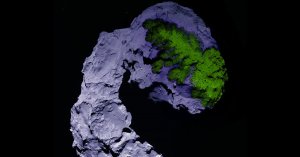
Researchers have sent 18 strains of bacteria to the International Space Station to test whether microbes can extract minerals from rocks in microgravity, a key step toward future space mining and soil creation on the Moon or Mars.
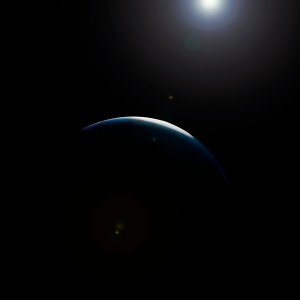
Astronomers have determined that DeeDee, a distant object at the edge of our solar system, is about two-thirds the size of Ceres and dark enough to reflect only 13 percent of sunlight. The finding, based on ALMA observations, highlights the growing capability to study remote planetary bodies and their role in understanding solar system formation.
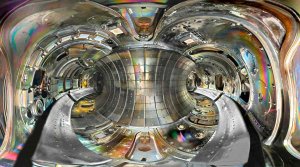
A senior MIT fusion researcher says nuclear fusion could feed the electric grid by the 2030s if research commitments hold. Earl Marmar, who led the Alcator C-Mod tokamak project, calls the timeline aggressive but within reach. The main hurdle is sustaining the reaction, not the underlying physics.
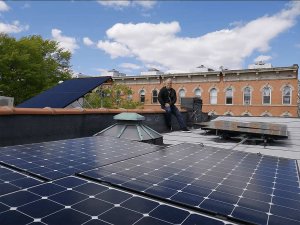
A Brooklyn startup is using blockchain to let neighbors trade solar power directly, bypassing traditional utilities. The Brooklyn Microgrid project has attracted 300 households and businesses, with 50 generation sites already in place. This peer-to-peer model could reshape how communities produce and consume electricity.
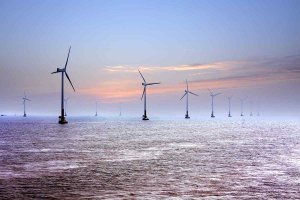
Deepwater Wind has proposed an offshore wind farm off Massachusetts that would combine 144 MW of turbines with 40 MW of Tesla battery storage, aiming to supply reliable clean power during peak demand. The project is part of a state solicitation that seeks about 9.45 million MWh annually. The company's prior success with Block Island gives it a competitive edge.