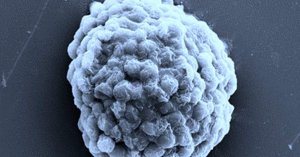
Researchers have engineered water droplets packed with photosynthetic algae to produce hydrogen instead of oxygen, offering a potential pathway to carbon-neutral fuel. The technique, detailed in Nature Communications, could scale up to reduce hydrogen fuel costs.
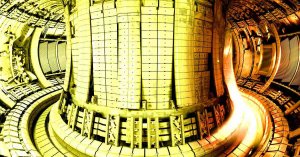
The Joint European Torus (JET) in the UK produced 59 megajoules of fusion energy over five seconds, doubling the previous record set in 1997. The achievement marks a significant step toward practical fusion power, though challenges remain before commercial reactors can be realized.

A new study by Harvard astronomers estimates that up to 4 quintillion interstellar objects could reside in the Sun's habitable zone, raising questions about potential extraterrestrial spacecraft. The research, based on recent detection rates, is not yet peer-reviewed.
Xcel Energy's Monticello nuclear plant leaked 400,000 gallons of tritium-contaminated water, but the public wasn't told for months. Officials say the delay was to investigate, but critics question the lack of transparency.

Researchers in Japan and Germany report a new method to convert high-energy blue light into usable electricity, achieving 130% quantum efficiency. The technique, which uses tetracene and molybdenum, could eventually help solar panels surpass the Shockley-Queisser limit, a theoretical ceiling set in 1961.