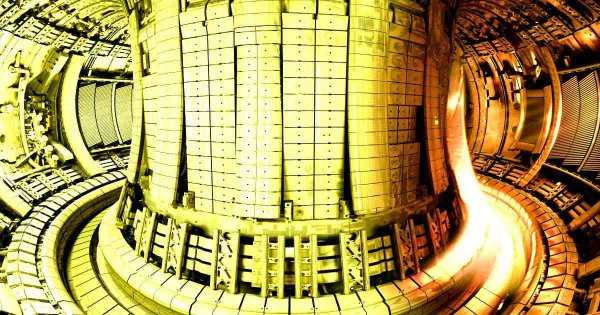
In a milestone that rekindles hope for clean, limitless energy, the Joint European Torus (JET) facility in the United Kingdom has produced 59 megajoules of fusion energy over a five-second period, according to a report from the BBC. The output, equivalent to 11 megawatts, is enough to boil about 60 kettles of water or match the energy of 30 pounds of TNT. This achievement more than doubles the previous record of 21.7 megajoules set at the same facility in 1997.
The experiment, conducted at the JET laboratory in Oxfordshire, involved heating ionized gases to temperatures roughly ten times that of the Sun's core, causing atomic nuclei to fuse and release substantial energy. The team behind the test hailed it as a major breakthrough, bringing the world a step closer to a green energy source that avoids the risks of nuclear meltdown.
“The JET experiments put us a step closer to fusion power,” said Joe Milnes, head of operations at JET, in an interview with the BBC. “We’ve demonstrated that we can create a mini star inside of our machine and hold it there for five seconds and get high performance, which really takes us into a new realm.”
Ian Chapman, chief executive of the UK Atomic Energy Authority, echoed the sentiment in a statement: “These landmark results have taken us a huge step closer to conquering one of the biggest scientific and engineering challenges of them all. It’s clear we must make significant changes to address the effects of climate change, and fusion offers so much potential.”
While the energy output is a notable achievement, the facility’s Q value—the ratio of fusion power output to input power—was just 0.33, meaning it produced only a third of the energy it consumed. A Q value of 1 would indicate a net energy gain. However, the fact that the reaction was sustained for five seconds is a significant leap from the 1997 record, which achieved a higher Q value of 0.7 but lasted less than 4 billionths of a second, as noted by Nature.
Mark Wenman, a nuclear materials research fellow at Imperial College London, told The Guardian that the sustained burn is the key achievement: “Five seconds doesn’t sound like much, but if you can burn it for five seconds, presumably you could keep it stable and keep it burning for many minutes, hours, or days, which is what you are going to need for a proper fusion power plant. It’s the proof of that concept that they have achieved.”
Setting the Stage for ITER
The JET experiment is a precursor to the much larger ITER fusion reactor under construction in France. JET uses the same deuterium-tritium fuel mix that ITER will employ, making these results a critical validation of the technology. The multi-billion-dollar ITER project aims to demonstrate the feasibility of fusion power on a commercial scale.
Despite the optimism, scientists acknowledge that fusion reactors are not yet ready to power homes. The path from this experimental success to a working power plant involves overcoming significant engineering and material challenges. Still, the team at JET found reason to celebrate, albeit with pandemic-era precautions.
“We didn’t jump up and down and hug each other—we were at 2 metres distance—but it was very exciting,” Fernanda Rimini, a plasma scientist at the Culham Centre for Fusion Energy (CCFE) where JET is based, told Nature.
The achievement at JET represents a tangible step forward in the decades-long quest for fusion energy, offering a glimpse of a future where clean, abundant power could help mitigate climate change. As the world watches, the next big test will come at ITER, where the lessons learned here will be put to larger-scale use.