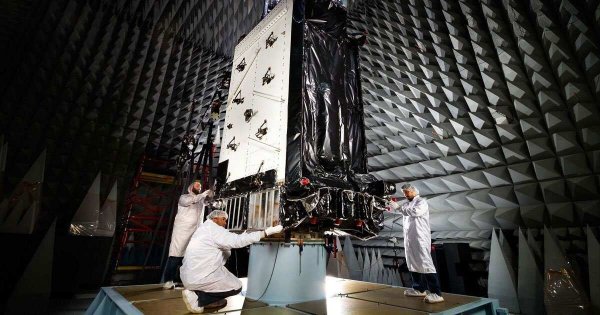
The U.S. Air Force is preparing to issue a novel challenge to the cybersecurity community: break into a live military satellite and seize control of its Earth-facing camera. The exercise, which also allows attempts against the satellite's terrestrial control station, marks an expansion of the service's recent effort to enlist outside expertise in finding vulnerabilities in its most sensitive systems.
The announcement comes roughly a month after the Air Force permitted a group of hackers—under strict supervision—to probe the software of an F-15 fighter jet for weaknesses. That engagement reportedly yielded results that pleased service officials, prompting them to extend the initiative into the next phase. It signals a cultural shift for an institution that has historically kept its hardware and software closed off from external scrutiny.
Will Roper, the Air Force's assistant secretary for acquisition, technology and logistics, told Wired that participants in the upcoming challenge will be free to target either the satellite itself or the ground infrastructure that commands it. "We will have opportunities for contestants to do both," Roper said. "But what they're going to do is try to take over the satellite by any means they find."
The F-15 exercise, which was reported by Wired, revealed that many of the most significant flaws were traced to components built by smaller contractors. These vendors, according to the report, often lack the resources to harden their products to the same degree as major defense primes like Lockheed Martin. The satellite challenge is expected to surface similar issues, potentially across a broader range of systems.
Why the Air Force is opening up
Roper has framed the initiative as a way to patch the entire military cybersecurity supply chain. By letting skilled hackers probe real-world systems, the Air Force hopes to identify and fix weaknesses before they can be exploited by adversaries. The approach is a departure from the traditional model of relying solely on internal security teams and classified testing.
The satellite challenge is part of a broader trend within the Defense Department to embrace "crowdsourced" security testing, a practice more common in the commercial tech industry. The Air Force's decision to continue the program suggests that the F-15 exercise provided enough value to justify the risks of exposing operational systems to outsiders.
Details about the satellite itself—including its orbit, capabilities, and which ground station will be involved—have not been disclosed. The Air Force has not yet announced the timeline for submissions or the rules of engagement, but Roper's comments indicate that the challenge will be structured to allow both remote and on-site attempts.
The move also comes amid growing concerns about the vulnerability of space-based assets. Military satellites are critical for communications, navigation, and intelligence, and their security is a matter of national security. By inviting hackers to probe these systems, the Air Force is acknowledging that the threat landscape has evolved and that defensive measures must be tested continuously.
Observers note that the success of such programs depends on the cooperation of contractors, who may be reluctant to have their products scrutinized. However, the Air Force's willingness to publicize the results of the F-15 exercise—and to continue the effort—suggests that the benefits are being seen as outweighing the potential downsides.
For now, the Air Force is expected to release more details about the satellite challenge in the coming weeks. The invitation is open to "white-hat" hackers—those who operate legally and ethically—and the service is likely to set strict boundaries to ensure that the exercise does not disrupt ongoing operations.