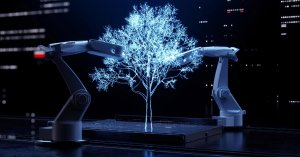
A proposal to put individual trees on the blockchain during a Manhattan community board meeting drew confusion and mockery online. The idea, aimed at monetizing trees through tokenization, highlights the ongoing debate over crypto's role in environmental efforts.
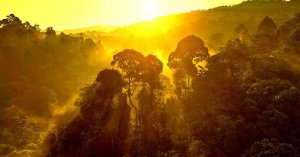
A Penn State-led study reveals that trees in warmer, drier regions release CO2 back into the atmosphere at up to twice the rate of those in cooler areas, undermining their role as carbon sinks. The findings, published in PNAS, suggest rising global temperatures could significantly reduce the planet's natural ability to absorb human-caused emissions.
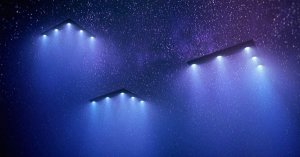
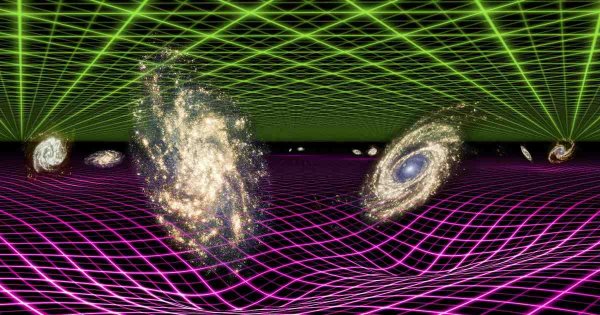
A new study by Harvard astronomers estimates that up to 4 quintillion interstellar objects could reside in the Sun's habitable zone, raising questions about potential extraterrestrial spacecraft. The research, based on recent detection rates, is not yet peer-reviewed.
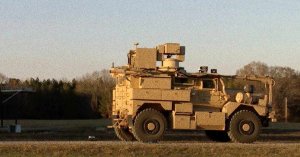
The U.S. Air Force has awarded a $40 million contract to Parsons for the RADBO system, a laser mounted on a ground vehicle capable of detonating landmines and unexploded ordnance from over 300 meters away. This development underscores the military's growing reliance on directed energy for non-combat roles, enhancing airfield safety without risking personnel.
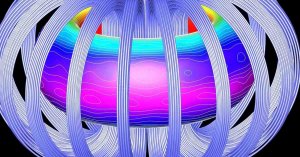
Princeton researchers propose using radio frequency waves to suppress magnetic islands in fusion reactors, potentially enhancing plasma stability. The theoretical study, published in Physics of Plasmas, offers a new approach to managing the intense heat and unpredictability of fusion plasma.
Xcel Energy's Monticello nuclear plant leaked 400,000 gallons of tritium-contaminated water, but the public wasn't told for months. Officials say the delay was to investigate, but critics question the lack of transparency.
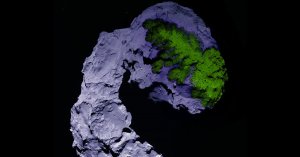
Researchers have sent 18 strains of bacteria to the International Space Station to test whether microbes can extract minerals from rocks in microgravity, a key step toward future space mining and soil creation on the Moon or Mars.