


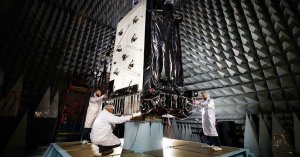
The U.S. Air Force is inviting ethical hackers to attempt to seize control of an active military satellite or its ground station, following a successful pilot program on an F-15 fighter jet. The initiative aims to expose vulnerabilities in military systems and strengthen the cybersecurity supply chain.
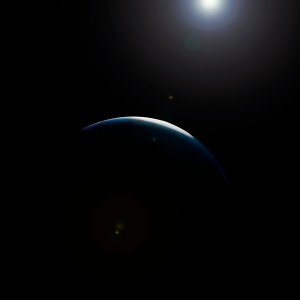
Astronomers have determined that DeeDee, a distant object at the edge of our solar system, is about two-thirds the size of Ceres and dark enough to reflect only 13 percent of sunlight. The finding, based on ALMA observations, highlights the growing capability to study remote planetary bodies and their role in understanding solar system formation.
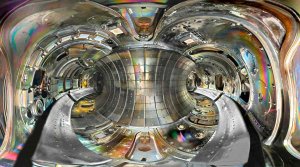
A senior MIT fusion researcher says nuclear fusion could feed the electric grid by the 2030s if research commitments hold. Earl Marmar, who led the Alcator C-Mod tokamak project, calls the timeline aggressive but within reach. The main hurdle is sustaining the reaction, not the underlying physics.
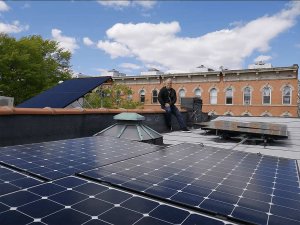
A Brooklyn startup is using blockchain to let neighbors trade solar power directly, bypassing traditional utilities. The Brooklyn Microgrid project has attracted 300 households and businesses, with 50 generation sites already in place. This peer-to-peer model could reshape how communities produce and consume electricity.

Deepwater Wind has proposed an offshore wind farm off Massachusetts that would combine 144 MW of turbines with 40 MW of Tesla battery storage, aiming to supply reliable clean power during peak demand. The project is part of a state solicitation that seeks about 9.45 million MWh annually. The company's prior success with Block Island gives it a competitive edge.

A Dowagiac, Michigan couple says the 30-megawatt Hyperscale Data facility has made their property nearly uninhabitable, with noise levels rising from 52 to 61 decibels since 2022. Two neighbors have filed suit, alleging physical invasion and inadequate soundproofing. Audiologists warn that even moderate, constant hums can harm health.
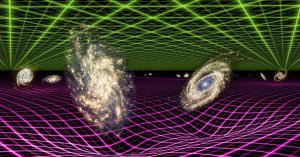
New observations of nearly 2,000 quasars suggest that dark energy, long thought to be constant, may be intensifying over cosmic time. The findings, published in Nature Astronomy, could challenge existing models of the universe's expansion and prompt a reevaluation of fundamental physics.
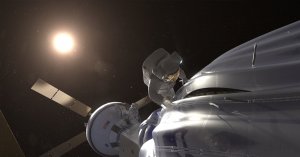
A group of scientists, led by Smithsonian astrophysicist Martin Elvis, proposes designating over 85% of the solar system as protected wilderness to prevent unchecked mining. They warn that without such safeguards, humanity could exhaust key resources like iron within 400 years. The proposal appears in an upcoming issue of Acta Astronautica.
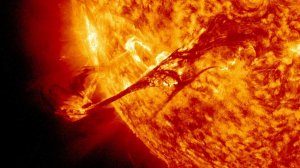
Astrophysicist Matthew Caplan of Illinois State University has designed a stellar engine, published in Acta Astronautica, that could theoretically move the entire solar system. The concept, illustrated in a Kurzgesagt video, uses a Dyson sphere and fusion reactors to push the Sun like a tugboat.
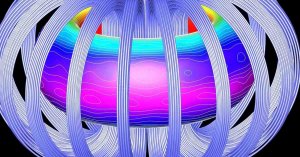
Princeton researchers propose using radio frequency waves to suppress magnetic islands in fusion reactors, potentially enhancing plasma stability. The theoretical study, published in Physics of Plasmas, offers a new approach to managing the intense heat and unpredictability of fusion plasma.
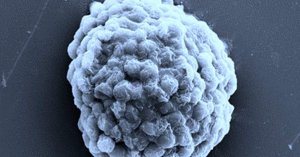
Researchers have engineered water droplets packed with photosynthetic algae to produce hydrogen instead of oxygen, offering a potential pathway to carbon-neutral fuel. The technique, detailed in Nature Communications, could scale up to reduce hydrogen fuel costs.
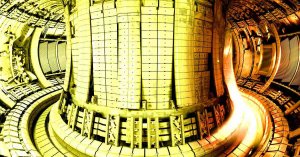
The Joint European Torus (JET) in the UK produced 59 megajoules of fusion energy over five seconds, doubling the previous record set in 1997. The achievement marks a significant step toward practical fusion power, though challenges remain before commercial reactors can be realized.

A new study by Harvard astronomers estimates that up to 4 quintillion interstellar objects could reside in the Sun's habitable zone, raising questions about potential extraterrestrial spacecraft. The research, based on recent detection rates, is not yet peer-reviewed.

Xcel Energy's Monticello nuclear plant leaked 400,000 gallons of tritium-contaminated water, but the public wasn't told for months. Officials say the delay was to investigate, but critics question the lack of transparency.

Researchers in Japan and Germany report a new method to convert high-energy blue light into usable electricity, achieving 130% quantum efficiency. The technique, which uses tetracene and molybdenum, could eventually help solar panels surpass the Shockley-Queisser limit, a theoretical ceiling set in 1961.